This year’s Davos theme, The Spirit of Dialogue, is a hot topic and one that’s been left hanging. Now that the 3000+ participants from 130 countries have departed Davos-Klosters and the 56th annual meeting of the World Economic Forum (WEF), it is too soon to tell what we’re left with. Mark Carney’s speech about the world being in a state of rupture, not transition, has certainly resonated. It raises the question: What does it take to talk when the times are so turbulent and there’s so much at stake? What it an authentic dialogue anyway?
Having worked as a dialogue facilitator for 20+ years, I’ve learnt that dialogue is not polite conversation nor a cosy chat. It’s not panel-speak or performative listening. It’s not fractious debate or circular conversations that go nowhere. True dialogue has a sense of ‘we’re in this together’ and allows something new to emerge. We might not reach agreement but we leave feeling more lucid than before we talked.
When I first started out as a dialogue facilitator in 2003, I was literally sitting on the edge of my seat. It was – and still is – the most demanding work I do. It’s a moment-by-moment discernment. When to step in and when to step back, when to speak and when to shut up, when to challenge and when to confirm, when to perturb and when not to disturb. Even if I continue to do this work for the next two decades, I still won’t have it all figured out. That said, there are some terrific tools to share and the rest of this article explores one way we can cultivate the ‘spirit of dialogue’ so that when there’s rupture, there can be repair.
What it takes to talk
Having an authentic dialogue might sound simple but it is not easy. The Dutch historian and author of bestselling books Rutger Bregman hit the global headlines for challenging a group of bankers and billionaires at the 2025 WEF gathering for refusing to address what he saw as the real issue: tax avoidance by the rich. It was, he said, like being at a firefighter’s conference and not being allowed to talk about water.
In his 2025 series of Reith lectures, Moral Revolution, Rutger Bregman acknowledged that he hadn’t been invited back to Davos. He shared:
“It was my first time at Davos. I found it to be quite boring, like exceptionally boring, even for conferences. And on Thursday, I had fled to my hotel room to work on the book “Humankind.” And I had a call with my wife. And she was saying like, come on, you’re at Davos, right? Tell them what you really think.”
When we share what we really think, it often gets uncomfortable. The temptation then is to sweep the issue under the carpet and step back into a polite but pointless conversation.
When dialogue is alive, conversations stop being boring. Groups stop avoiding the difficult topic. Individuals stop trying to have their point of view prevail. Instead, they start trying to understand the perspectives of others. And when this shared understanding emerges, wiser decisions become possible. A group steps out of the state of ‘flow’ (which is the hallmark of true dialogue) and into the ‘clutch’ state where they make decisions, agree actions and commit to follow through.
I learnt about the ‘clutch’ state from athletes who know how to flick the switch, when the stakes go up during a game, from ‘letting it happen’ to ‘making it happen.’ When faced with a pivotal moment (such as a match point in tennis) they apply more deliberate effort, focused attention and narrower goals. In a business setting, the equivalent is to bring a meeting (or conference) to a strong close so that people don’t leave thinking ‘that was a great conversation but what are we really left with?’
What kind of conversation do we need to have?
To arrive to a place of shared understanding and co-ordinated action, it helps to ask: What’s the conversation do we need to have right now?
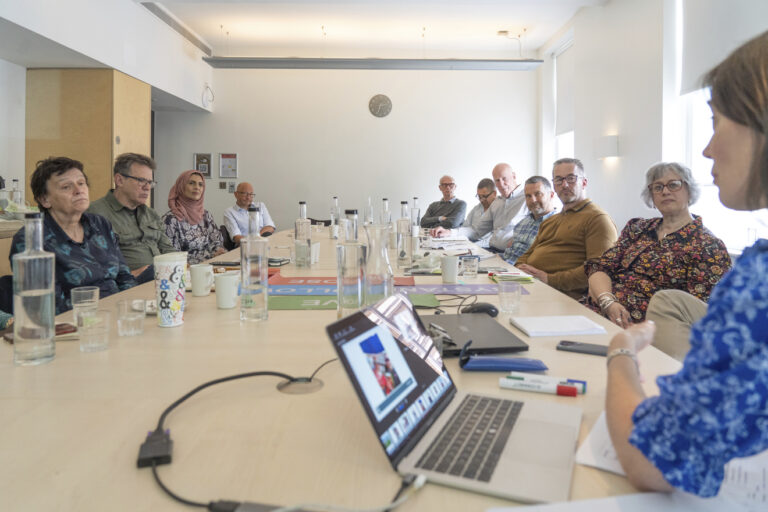
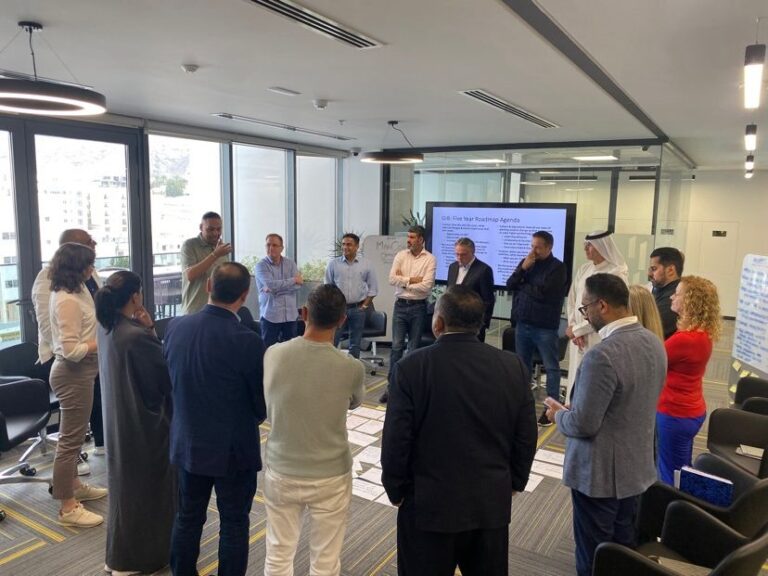
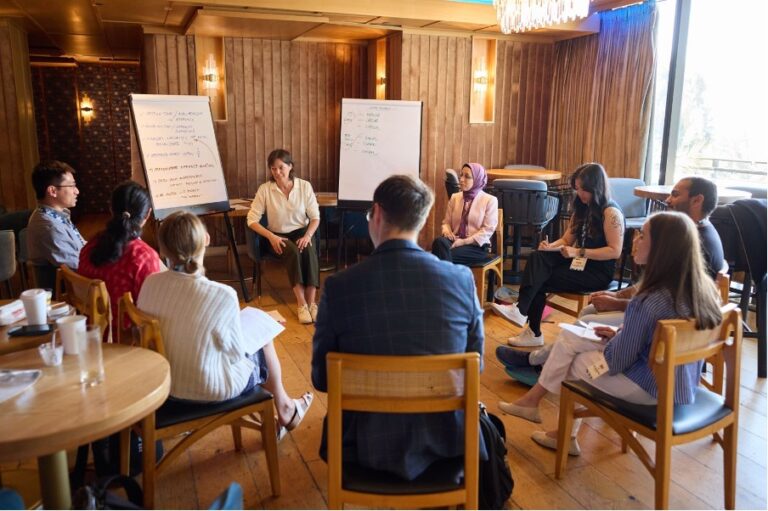
Inspired by a recent session where I worked with a group of senior leaders in a fast paced FMCG environment (pictured), one way to think about this is to borrow from the Discovery Insights colour framework – and think about conversations as having a dominant ‘colour energy.’ Even if you’re not familiar with this framework, you might still find the following distinction helpful for discerning which type of dialogue you need to be having.
🟢 Green conversations – relational and caring
These are about trust, safety and connection.
They sound like:
– “How are you doing, really?”
– “What’s this been like for you?”
Green conversations create ‘glue’ that keeps things together when the stakes go up.
They struggle when kindness replaces honesty.
‘Green’ conversations are often helpful at the start of a meeting or early on. They help to generate psychological safety and to create a ‘container’ for a conversation where people feel able to open up and talk.
🟡 Yellow conversations – imaginative and exploratory
These are about possibilities, patterns and play.
They sound like:
– “What if…?”
– “Could we look at this differently?”
Yellow conversations open doors with their upbeat energy.
They struggle when they never land anywhere.
‘Yellow’ conversations are needed when there’s some blue-sky thinking to do. They engage our imaginations which is essential for discussing strategy, new initiatives and doing a re-set.
🔵 Blue conversations – thoughtful and structured
These are about sense-making, logic and rigour.
They sound like:
– “What’s the data telling us?”
– “What’s the process here?”
Blue conversations bring clarity.
They falter when we forget about our very human frailties and vulnerabilities.
‘Blue’ conversations come into their own when the details matter, parameters need putting in place or principles need to be agreed.
🔴 Red conversations – decisive and direct
These are about action, clarity and movement. They sound like:
– “Let’s decide.”
– “What are we doing by Friday?”
Red conversations work when something needs momentum.
They fail when people’s feelings, concerns or ideas haven’t been heard yet.
‘Red’ conversations are another way of looking at the ‘clutch’ state where a dialogue needs to have some ‘bite’ in order for things to move forward.
The art of dialogue
The real art of dialogue isn’t picking one colour. It’s noticing what colour is needed now and bringing in that energy, that spirit, that atmosphere. Many of our stuck moments in meetings aren’t about skill or motivation – they’re colour mismatches:
- Bringing Red and being too ‘tasky’ when people need Green and to connect (who hasn’t done that?)
- Offering Blue and heady clarity when people are yearning for some upbeat Yellow.
- Staying in Yellow bubbliness when it’s time for some Blue clear thinking or Red action.
- Going for ‘Green’ and seeking to be forgiving when it’s actually time to be more directive and not expect too much from others who might be learning-on-the-job.
So next time a conversation feels flat, tense or unproductive, try this question: What colour is this conversation – and what colour does it actually need?
From Davos to daily life
When we start to tune into the energy of our everyday conversations, we don’t just communicate better, we make better decisions. In these turbulent, unsettling, game-changing times, dialogue is something that we cannot afford to be without.
Ultimately the spirit of dialogue doesn’t live in conference halls. It lives in meetings, kitchens, classrooms, boardrooms and factory floors.
It shows up when someone says:
“Help me understand.”
“I might be wrong.”
“Tell me more.”
“What are we not seeing?”
If this year’s Davos theme is to mean anything, it must move from slogan to skill. From aspiration to application. From talking shop to taking action.
Because dialogue is not what we say about the world.
It is how we create it.